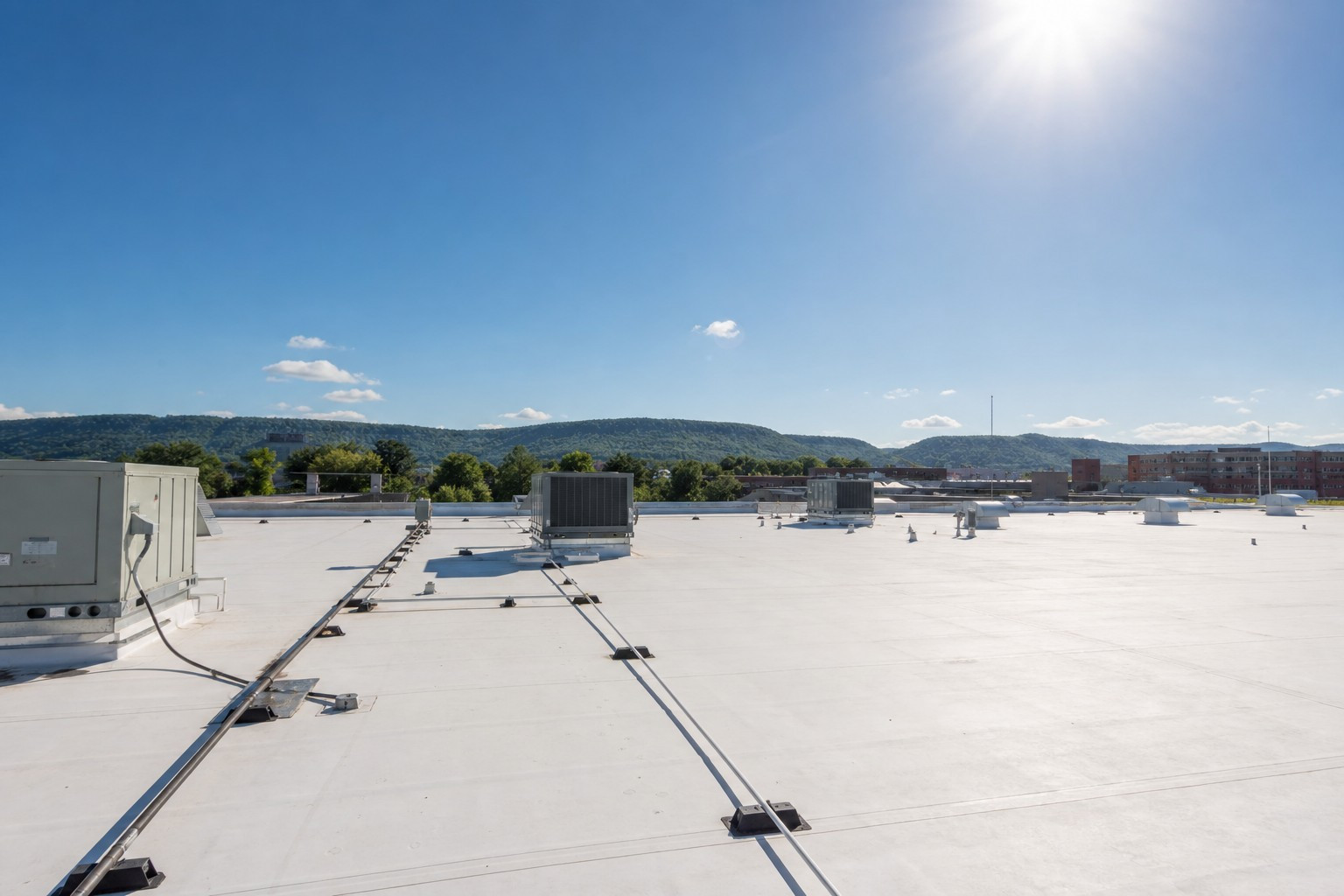
How Summer Heat Affects Your Commercial Roof and What You Can Do About It
Summer heat is hard on a commercial roof. It bakes the membrane. It dries out sealants. It causes material fatigue. On a sunny day, the roof surface can get 50 to 90 degrees hotter than the air. That intense heat makes roofing materials swell by day and shrink at night. The movement cracks seams and lets water in. The best protection? Regular roof inspections and reflective roofing systems.
⚡ QUICK SUMMARY
Summer heat is a stress test for every commercial roof. Extreme heat causes thermal shock, cracked sealants, blisters, and wear and tear. HVAC systems work harder and add stress on the roof. A summer roof inspection catches the harm early, before small cracks turn into leaks.
Chattanooga summers are hard on buildings. Flat roofs are constantly exposed to the sun. The roof surface soaks up that solar radiation for hours. J.D. Helton Roofing Co., Inc. has worked on commercial roofing systems here since 1932. We serve Chattanooga and the whole Southeast. In more than 90 years of hot Tennessee summers, we have seen what summer heat commercial roof damage looks like. We also know how to stop it.
This guide explains how summer heat affects a roofing system. You will learn the early warning signs. You will also learn the steps that protect your building and extend roof life.
How Does Summer Heat Damage a Commercial Roof?
Summer heat damages a commercial roof through constant expansion and contraction. Roofing materials swell in the heat of the day. They shrink again at night. Weeks of these temperature fluctuations add up. Seams pull apart. Sealants crack. Wear and tear spreads across the whole roofing system.
50-90°F
How much hotter a conventional roof surface can get than the air on a sunny day
On a 95 degree Chattanooga day, a dark roof can pass 150 degrees. Prolonged heat like that bakes the oils out of roofing membranes. They turn brittle. Prolonged exposure to UV rays adds more harm. It speeds up wear on any roof that has lost its coating.
Early Signs of Heat Damage on a Commercial Roof
Blisters and bubbles - Trapped moisture under the membrane heats up and pushes the surface up in spots.
Cracked sealants and caulk - Heat dries out sealants around vents, pipes, and edges first.
Open seams and loose flashing - Daily movement pulls seams apart and invites water intrusion.
Ponding water after storms - Heat can warp insulation and the roof deck. Low spots form. Water sits in them. Standing water is also a breeding ground for algae and mold.
What Is Thermal Shock on Commercial Roofing Systems?
Thermal shock is a fast, extreme temperature swing on a roof surface. It happens when a summer storm drops cool rain on a roof that baked all day. The surface temperature can fall 60 degrees or more in minutes.
Roofing membranes cannot flex that fast. Thermal shock splits seams and cracks flashing. It shortens roof lifespan on existing roofs that are already worn. Older roofing materials get hit hardest. Brittle membranes crack instead of stretching. Over time, that hurts the structural integrity of the roof deck.
⚠️ Important
Heat damage hides. A roof can look fine from the ground while seams open and moisture spreads under the membrane. By the time ceiling stains show up inside, the trapped moisture may have soaked insulation across a wide area. That is why roof inspections matter even when nothing is dripping.
How Do HVAC Systems Add to Summer Roof Stress?
HVAC systems stress a commercial roof most in summer. Rooftop units run longer in hot weather. That means more vibration. More condensation drains onto the membrane. Crews make more service visits. Every extra trip up there adds foot traffic wear around the units.
A hot surface also traps heat under the HVAC units. They have to work harder. That hurts the energy efficiency of the whole building. Facility managers should check around the rooftop units first. That is where cracked sealants and worn walk pads show up first.
Does Poor Attic Ventilation Make Things Worse?
Yes. Poor ventilation traps heat under the roof. It cooks the assembly from below. Buildings with attic space or metal roofing feel this most. Good attic ventilation lets hot air escape, so the roof deck stays cooler and lasts longer.
Does your building have an attic or a vented roof space? Ask about attic ventilation at your next inspection. Fixing airflow is a small job. Ignoring it can lead to structural damage over time.
Not sure what summer did to your roof? Our team can take a look.
Call (423) 867-4400How Do You Protect a Commercial Roof From Summer Heat?
You protect a commercial roof from summer heat with three things: inspections, clean drains, and reflective surfaces. These simple steps help building owners avoid costly repairs later.
1Schedule a roof inspection each summer
A professional inspection catches early signs of heat damage. Think soft spots, open seams, and dried-out sealant around pipes and vents.
2Keep the drainage system clear
Clogged drains cause ponding water. Standing water plus high heat speeds up membrane breakdown on flat roofs.
3Add a reflective coating or membrane
Roof coatings with a white reflective surface bounce solar radiation away. The surface temperature drops. Energy efficiency goes up.
4Fix small roofing issues fast
A cracked sealant joint is a cheap fix today. After a season of summer weather, it can become a much bigger repair.
💡 Pro Tip
Book roof inspections twice a year. Do one after summer and one after winter. Heat and cold hurt a roofing system in different ways. Preventative maintenance in both seasons catches problems while they are small. See our roof maintenance services for what an inspection covers.
What Is the 25% Rule for Roofing?
The 25% rule is a common code guideline. Say more than 25% of a roof gets damaged within one year. Then the whole roof section may need to meet current code, not just get patched. Rules vary by location. Ask your contractor how it applies to your building.
This is one more reason to act early. Small problems stay in simple repair territory. Letting material fatigue spread across the roof can push you past that line. Then a repair turns into a replacement project.
Which Roofing Materials Handle Summer Heat Best?
White reflective membranes like TPO handle summer heat best on most commercial buildings. We are an authorized Versico Roofing Systems partner. We install TPO, EPDM, metal, built-up, and flat roof systems. We back them with manufacturer warranties. One example: we put the Versico TPO roofing system on the Tomorrow Building in Chattanooga. See that job and more on our projects page.
|
☀️ TPO (White Membrane) Reflects the summer sun and keeps the surface cool. It cuts cooling costs. A top pick for hot places. |
🛡️ EPDM (Rubber Membrane) Stretches as the roof moves. It resists thermal shock and daily wear well. |
|
🏭 Metal Roofing Sheds heat fast. It lasts for decades when seams and fasteners get care. |
🖌️ Reflective Coatings A bright coating blocks UV exposure. It renews existing roofs and adds roof life with no tear-off. |
Not sure which roofing system fits your building and budget? Our commercial roofing services page covers every option above. Our roofing FAQs page answers what building owners ask us most.
About J.D. Helton Roofing Co., Inc.
J.D. Helton Roofing Co., Inc. is a licensed, bonded, and insured roofing contractor. We hold Tennessee License #9540. We are a BBB Accredited business. Our family team has served Chattanooga since 1932. Our crews focus on safety and quality craftsmanship. We install, fix, and maintain commercial and industrial roofing systems across the Southeast.
Beat the Heat Before It Beats Your Roof
Get your building checked for summer wear before small cracks become big leaks.
| Call (423) 867-4400 → |
